







6 on the record this issue
Turn Questions Into Written Decisions
Derek WildCEO & Founder · Listening.comThe biggest improvement we made wasn't adding another communication tool. It was creating a simple rule: if a question can wait an hour, it should become documentation instead of a direct message.
At first that felt slower. In reality, it sped everything up. Instead of interrupting someone with, "How should I handle this?", people would write a short note with the context, what they'd already tried, and the decision they were leaning toward. By the time someone reviewed it, the answer often became obvious, or another teammate could jump in without needing a meeting.
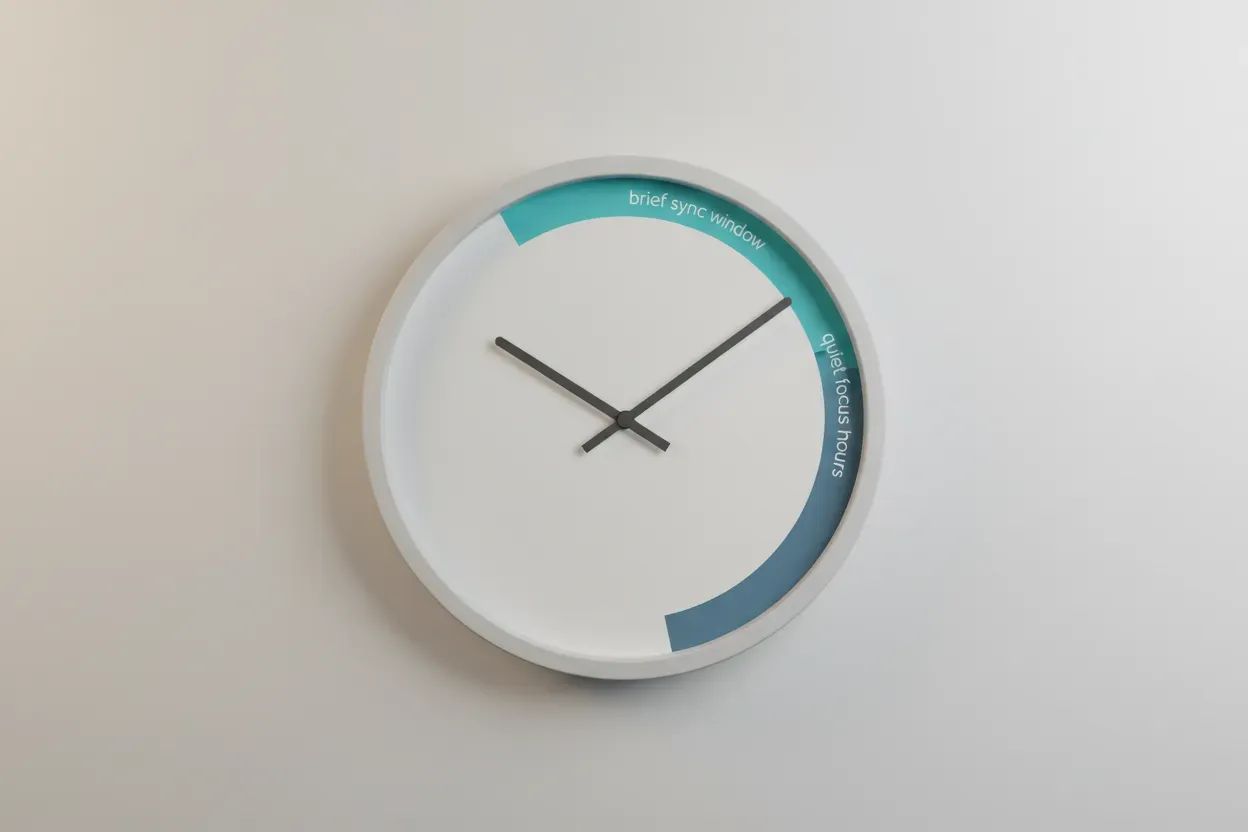
We also introduced what we called a "decision window." Every afternoon, engineers and product leads reviewed open questions in batches rather than responding all day. That single boundary dramatically reduced context switching, which is one of the biggest hidden productivity killers on remote teams. Developers spent longer stretches actually building instead of constantly reacting to Slack notifications.
The surprising part is that alignment improved, not worsened. Because decisions were written down before they were discussed, everyone could see the reasoning behind them—not just the final answer. New hires ramped up faster, repeated questions almost disappeared, and meetings became the exception rather than the default. The goal wasn't faster replies. It was fewer interruptions and better decisions, and those are very different things.
Grant Autonomy And Require Full Context
Hwee-Boon YarFounder · TheBlue.socialRemote teams can still be sync or async. Going to assume the latter here, and possibly across timezones:
Reduce round trips. Mandate providing full context and where possible, formulate questions so there are yes/no answers. Grant autonomy. So developers and other ICs have the authority to make decisions.
This changes everything.
Define Urgency And Share Daily Updates
Raj JaganiCEO · Tibicle LLPThe communication problem that hurt us most at Tibicle was not too many meetings. It was too many unstructured Slack messages that required immediate responses. A developer deep in a complex feature would get pulled out of focus six times in an afternoon by messages that were genuinely not urgent but were framed as if they were.
The norm that fixed it was defining two message types explicitly. Needs a response today versus needs a response within the hour. Most messages defaulted to urgent by assumption rather than by actual necessity.
We introduced a simple rule. If a message can wait until the next standup without blocking anyone, it gets posted in the project channel without a direct mention. If it genuinely blocks someone right now, it gets a direct mention with a one-line explanation of why it is urgent.
Direct mentions dropped significantly within two weeks. Developers started self-auditing whether their message actually required immediate attention or just felt like it did.
The ritual that preserved alignment without meetings was a written end-of-day update from each project lead. Three lines. What shipped, what is blocked, what is next. It takes five minutes to write and means the first hour of the next day starts with context rather than catch-up calls.
Protect Maker Hours With Structured Requests
Remote teams often lose speed because communication norms are built around availability instead of clarity. The most practical fix is to separate collaboration from interruption. A team should agree that chat is for coordination, not problem solving, and that complex questions must arrive with context, options, and a recommended next step. That simple standard reduces back and forth and improves the quality of decisions.
One boundary that made a measurable difference is a no instant reply expectation during maker hours. I used this with technical teams by setting two protected blocks each day for deep work, while reserving a defined window for questions and approvals. Work kept moving, and fewer meetings were needed because attention stopped getting scattered.
Build Presence And One Shared Truth
Carol GrojeanConsultant · Grojean ConsultingI will answer this from the human-system side rather than as an engineering lead, because that is my work, and it reframes the question. Most advice treats interruptions and alignment as a tradeoff: cut the meetings and risk drift, or stay aligned and drown in pings. That tradeoff is a symptom, not a law. Teams interrupt each other constantly because they are not truly aligned, so they keep reaching out to re-sync. Build real alignment and most interruptions stop being necessary.
Three things do that, and they work as a set.
First, a single source of truth. Every decision, owner, and change lives in one place the team trusts, captured the moment it is made. This kills the interruptions that break flow: the "wait, what did we decide" thread, the DM checking if you are on the old plan, the meeting called only to re-confirm what everyone remembers differently. Remote, people quietly proceed on different assumptions and it surfaces weeks later at ten times the cost.
Second, a boundary I hold firmly: no laptops or phones in the meeting. When we meet, we are actually here. A meeting where half the room is triaging Slack underneath the conversation is not a meeting, it is several people in the same window pretending. Fewer meetings, but real ones, beats many that nobody is inside of.
But here is the part most advice misses, and it matters most. You cannot align people who are not present within themselves first. A team is a set of nervous systems, and you cannot sync scattered, depleted, half-here nervous systems no matter how good your norms are. Alignment between people is downstream of presence within each person. So the real work, before any ritual, is helping people arrive: aware of their own state, their attention, their energy, actually in the room rather than mentally three tabs away.
This is measurable now. Through the work I do with teams, we can read whether a group is genuinely synchronized and present or just co-located, and it is remarkable how often a team that looks fine is quietly scattered. But you do not need instruments to start. You need to treat personal presence as the precondition for team alignment, not a nice-to-have.
So the norm is not fewer words. It is one source of truth, real presence in the room, and people grounded enough to actually be there. Get those, and the interruptions take care of themselves.
Steer Work With Weekly Exception Minutes
Jagruti DhandeSenior Technical Program Manager · Lucid MotorsAs a hardware program manager at an EV company, my remote team is never only software. A single feature moves through firmware, electrical and mechanical design, validation and supplier work spread across more than seven countries. There is no hour of the day when everyone is awake, and only a narrow window when any two regions are. So the first norm I set is blunt: status is never spoken, instead documented. The issue log, Confluence, risk registers and the PLM record are the source of truth, and live time is reserved for decisions with a named decider.
I run one program meeting a week, and its real output is the minutes. Every item is written the same five ways: what moved, what is blocked and on whom, what one region needs from another, current sample and bench availability, and any decision waiting on sign-off. Each line carries one named owner and a date. Nobody leaves with a shared task.
Those minutes are published on Confluence, and that page, not the meeting, is where the week actually happens. Teams in other time zones comment on it as they pick the work up, so a concern raised in their morning is answered against the written record rather than held for the next call. Automated notifications do the chasing from there, reminding owners and stakeholders of pending actions and open risks without me sending a single follow-up. That is why we have never needed daily stand-ups.
A few habits keep it working. Run the meeting on exceptions only: if the page says an item is on track, it is not discussed. Give comments a response commitment, one working day, so raising a concern is never a dead end. Treat silence on a documented decision as consent after a fixed window, so the sleeping region gets a real vote instead of a summary. And publish your escalation tiers, because people stop interrupting once they know interrupting is still allowed.
Thirty-plus engineers spanned from North America to Asia, from seven-plus countries. Three supplier partners coordinated through one meeting a week. The meetings are not what holds a program together. The written record is.